

What is Executive Communication?
Executive communication is how leaders create understanding – and turn that understanding into action.
It goes beyond presenting ideas. It’s how leaders:
- Clarify expectations
- Align teams
- Build trust through consistency
Communication is not a one-time skill. It’s a repeatable system built on clarity, listening, presence, and preparation.
When those elements are missing, teams feel it – through confusion, misalignment, and slower progress. When they’re present, communication becomes a leadership advantage.

The Foundation:
Clarity That Creates Culture
Clarity is the foundation of effective leadership – and the driver of organizational culture.
When leaders communicate clearly, people know what matters. They understand where to focus, how to act, and what success looks like. Without that clarity, even strong teams can lose direction.
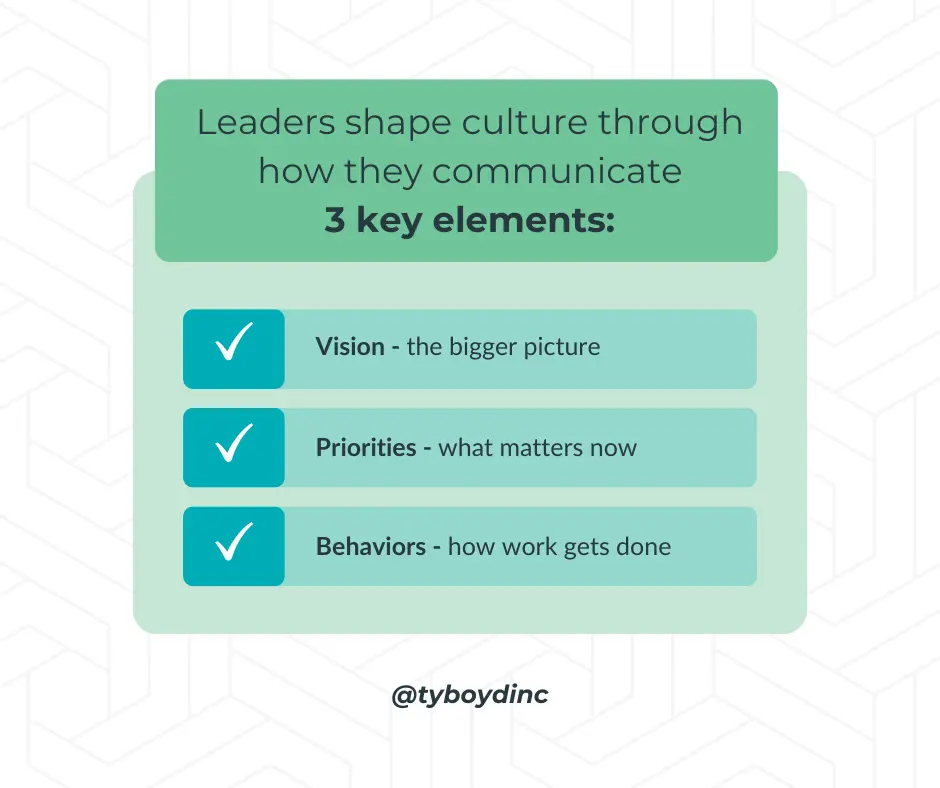
Consistent communication around these areas builds alignment and trust. It also reduces confusion and helps teams move faster with greater confidence.
Clarity doesn’t happen once. It’s reinforced through repetition, structure, and intentional communication.
Authentic Presence:
Authenticity That Builds Trust
Executive presence isn’t about perfection, it’s about authenticity.
Leaders build trust when their communication reflects who they are, not who they think they need to be. People respond to consistency between words and actions.

What Authentic Presence Looks Like
Authentic presence shows up in:
- Clear, direct communication
- Steady behavior under pressure
- Alignment between message and intent
The Role of Non-Verbal Communication
Non-verbal communication (tone, posture, eye contact) reinforces credibility and confidence.
Leaders who communicate authentically create environments where people feel more comfortable engaging, contributing, and trusting the direction they’re given.
Listening as a Leadership Advantage
Strong communication starts with listening.
Leaders often focus on what they need to say – but the real advantage comes from what they’re able to hear. Listening uncovers what’s working, what’s unclear, and where alignment is breaking down.
Without active listening, leaders rely on assumptions. With it, they gain insight.
What Effective Listening Includes
Effective listening includes:
- Paying attention to both words and patterns
- Recognizing what isn’t being said
- Creating space for honest input
When leaders listen well, communication becomes two-directional. That builds trust, improves decision-making, and strengthens overall alignment across teams.
Watch the video below to learn more about listening as a leadership advantage ⬇️
Preparation:
The System Behind Confident Communcation
Confidence in communication is not natural – it’s built through preparation.
Even small, intentional preparation can significantly improve clarity and delivery. Leaders who prepare consistently are able to communicate more effectively, especially in high-pressure situations.
Preparation creates a system leaders can rely on – not just in presentations, but in everyday conversations.
Executive Communication in Practice
Leaders don’t just share information – they create meaning.
Using simple, structured storytelling helps audiences understand not just what is being said, but why it matters. This increases engagement and retention.
But where do the stories come from? There are simple techniques you can use for identifying and remembering stories from your own life and stories you hear from others, so you can be ready to apply these powerful anecdotes to your communication.
Handling questions or unexpected moments becomes easier with preparation.
Start with identifying the most difficult questions that could come from a situation – a presentation, a one-on-one, or an all-hands meeting. Don’t work on this alone. Ask a few close peers to contribute their thoughts, and consider using AI. Then think through and practice responses.
Learning simple frameworks – like organizing thoughts around past, present, and future (PPF) – can help leaders respond clearly under pressure.
Strong communication is built over time through consistent habits:
- capturing ideas regularly
- reflecting on experiences
- practicing in low-pressure moments
These small actions create noticeable improvement over time.
Watch the video below to learn how you can build confidence in communication ⬇️
Navigating Difficult Conversations with Confidence
Difficult conversations are a defining part of leadership.
Avoiding them often leads to greater problems – misalignment, frustration, and stalled progress. Effective leaders approach these conversations with clarity and preparation rather than avoidance.
Strong communication in these moments requres:
- Clear intent
- Direct but respectful language
- The ability to listen and respond thoughtfully
Preparation plays a key role. When leaders take time to organize their message and anticipate responses, they are better equipped to stay focused and productive during the conversation.
Handled well, difficult conversations can strengthen relationships, improve performance, and reinforce expectations.
Watch the video below to learn more about navigating difficult conversations ⬇️
Customizing Communication for Every Audience
Great leaders know that effective communication starts with the audience – not the speaker. Customizing communication means intentionally shaping your message around what your listeners need, how they prefer to receive information, and what action you want them to take. When leaders fail to do this, even well‑intended messages can miss the mark.
Audience‑first communication requires empathy, clarity, and adaptability. By considering factors like roles, motivations, pressures, and communication preferences, leaders build stronger relationships, reduce friction, and increase buy‑in. When people feel understood, they engage – and when they engage, communication drives results.
Mastering Virtual Meetings and Presentations
Virtual meetings are now a core leadership platform – not a temporary workaround. Executives are expected to lead, align, and inspire through a screen, often with limited time and competing distractions. When virtual communication lacks structure or energy, engagement drops quickly.
Strong virtual communication combines preparation, presence, and intentional design. From audio and lighting basics to interactive engagement and clear structure, leaders who master the medium create stronger human connection online. With the right system in place, virtual meetings become more focused, more efficient, and more effective at moving work forward.
Bringing It All Together:
Executive Communication as a System
Each of these skills – clarity, authenticity, listening, preparation, and navigating difficult conversations – works together.
These are not separate abilities. They form a system:
- Clarity aligns teams
- Authenticity builds trust
- Listening reveals insight
- Preparation builds confidence
- Navigating difficult conversations drives progress
When leaders develop all five, communication becomes consistent, intentional, and effective across every situation.
That’s what turns communication into a true leadership advantage.